


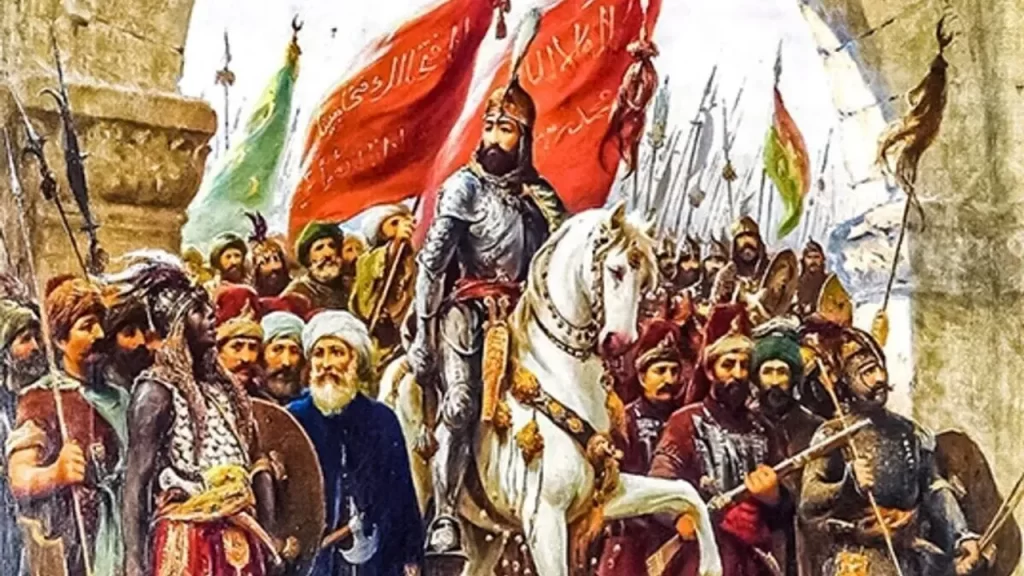
Known as Mehmed the Conqueror, the 7th Sultan of the Ottoman Empire, he captured Constantinople in 1453 at just 21 years old — a victory that not only ended the Byzantine Empire but also reshaped the political and cultural landscape of the world.
His rule, marked by military genius and visionary governance, laid the foundations of a global empire that would endure for centuries.
From a Young Prince to the Conqueror of Empires
Who is Mehmed II in the eyes of history? Born in Edirne in 1432, Mehmed was the son of Sultan Murad II. Trained in theology, languages, and statecraft from a young age, he ascended the throne twice — first briefly in 1444, then permanently in 1451.
His most iconic achievement came two years later: the conquest of Constantinople, a feat that had eluded many before him. With this, he transformed the city into the Ottoman capital, Istanbul — a nexus of East and West.
A Multilingual Polymath and Patron of Culture
Mehmed was more than a warrior. Fluent in Arabic, Persian, Greek, Latin, and Turkish, he surrounded himself with scholars, artists, and philosophers from across the Islamic and Christian worlds.
He preserved the Orthodox Church, appointed a patriarch, and encouraged the translation of Christian doctrine into Turkish. His court was a symbol of intellectual coexistence and cultural fusion.
Lawgiver, Reformer, and Builder
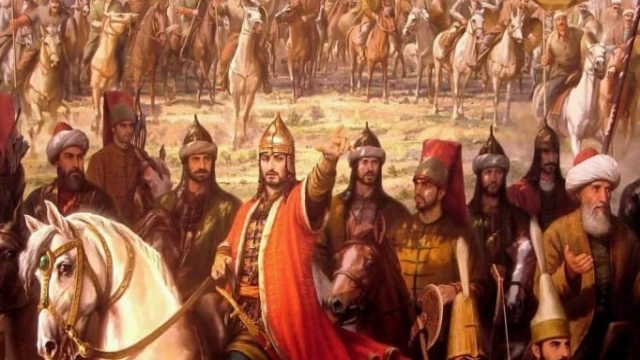
Who is Mehmed II in legal history? Long before Suleiman the Magnificent, Mehmed codified both criminal and constitutional laws, becoming the first Ottoman ruler to do so. His reforms shaped the administrative and legal structure of the empire.
He also commissioned monumental works like the Fatih Mosque Complex, where he was later buried, establishing Istanbul as a spiritual and political capital.
Final Campaign and Everlasting Legacy
In 1481, while preparing for yet another military campaign, Mehmed fell ill and died near Istanbul. He was 49. His death marked the end of an era, but his legacy endured — not only in architecture and governance but also in collective memory.
Today, Istanbul’s Fatih Sultan Mehmet Bridge stands as a modern tribute to a ruler whose vision transcended borders and centuries.