

Armenia’s Stamp Redesign Marks a Shift
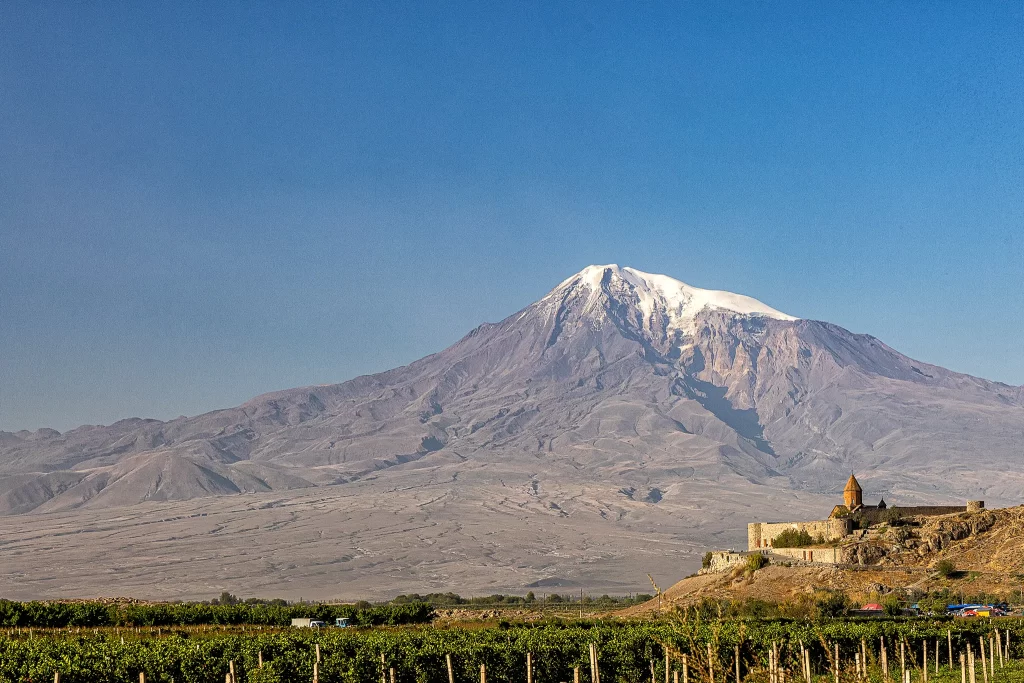
From November 1, 2025, Armenia will stop using the image of Mount Ararat on its border stamps. The government confirmed the decision on September 11, 2025.
Under the new design, stamps will carry “Armenia” in both Armenian and English, the name of the crossing point, entry and exit dates, verification codes, and transport symbols for air, rail, or road.
The announcement was shared publicly by Mesrop Arakelyan, co-founder of the Land to Live party, through his social media channels. The move has already sparked debate among Armenians and observers abroad.
Mount Ararat’s Symbolism and History
For centuries, Mount Ararat has been the most powerful national symbol of Armenia. It stands at the center of the country’s coat of arms and plays a key role in cultural and spiritual life.
Yet geographically, the mountain lies inside Turkish territory. This reality dates back to the 1921 Treaty of Moscow, which transferred the Surmalu district — once part of the Erivan Governorate of the Russian Empire — to Turkey. Since then, Armenians have regarded Ararat as both a sacred mountain and a reminder of historical loss.
Removing Ararat from border stamps does not erase its cultural significance. Instead, it reflects a political decision acknowledging the mountain’s current geographic status while still preserving its symbolic role in Armenian identity.
Armenia–Turkey Relations in Transition
The redesign of border stamps comes at a sensitive time for Armenia–Turkey relations. The two countries have shared a closed border since 1993 and lack formal diplomatic ties.
Disputes over history remain central. Ankara rejects Armenia’s characterization of the 1915 events as genocide, while Yerevan remains critical of Turkey’s support for Azerbaijan during the Nagorno-Karabakh conflict.
Even so, there are signs of progress. Direct flights between the two countries resumed in 2022. Negotiations have continued between Turkish envoy Serdar Kılıç and Armenian representative Ruben Rubinyan, focusing on trade, infrastructure, and regional stability.
Symbolism Beyond Borders
The decision to remove Mount Ararat from stamps carries symbolic weight beyond its practical purpose. It represents an attempt by Armenia to balance national identity with political realities and ongoing efforts to reduce tension with Turkey.
Ararat will remain an emblem of Armenian culture and spirituality. But its absence from official documents may lower friction in bilateral relations and create space for dialogue.
For both Armenia and Turkey, this change illustrates how symbolism, politics, and history intersect in the search for regional peace and cooperation.
Read more on Turkey Tribune