

A Separation proves silence can be powerful
A Separation proves that a masterpiece can be crafted without music. Music often stirs emotions and carries a film’s message. Yet A Separation weaves feelings into our hearts without using a single note.
The director avoids other cinematic artifices as well. There is no artificial lighting, no studio sets, and no manufactured sound effects. Real locations and natural light give the film striking authenticity. The result is a unique cinematic achievement.
The story opens with the divorce proceedings of Nader and Simin. Even the credits appear over photocopies of their identity cards. This detail underlines the formality of the divorce request.
The audience as judge
In the opening scene, the judge never appears. The camera takes his place, making the audience the arbiter. As events unfold, we are forced to weigh who is right and who is wrong. Yet no verdict arrives—the judgment rests with us.
Each character knows only part of the story. This makes their actions seem justified from their own perspective. Every one of them defends their position, seeking righteousness. Still, even with more knowledge than the characters, the audience struggles to reach certainty.
Director Asghar Farhadi not only wrote and produced the film, but also cast his daughter as Termeh. Her age does not fully match the role, yet she embodies it naturally. The performance feels authentic.
A story without excess
From beginning to end, “A Separation” contains no superfluous moment. Every scene offers essential detail: characters’ values, social class, sequence of events, and moral choices.
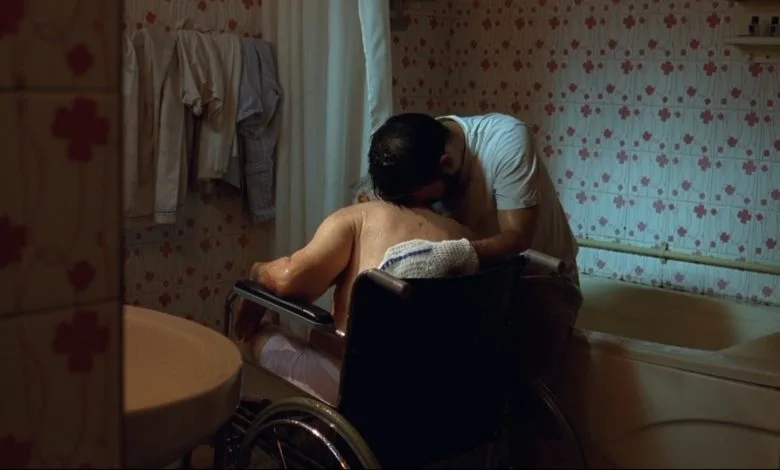
At its heart lies the conflict between Simin, who wants to leave Iran for a better life, and Nader, who feels duty-bound to care for his father with Alzheimer’s. The father’s illness is not an excuse but a cause. What matters is not that he no longer recognizes Nader as his son, but that Nader still recognizes him as his father. This tension raises a profound question: Is it better for a child to stay with both parents in hardship, or with one parent in better conditions?
The second conflict is class. Termeh studies how Sassanian society divided people into upper and middle classes. The film shows that this division remains in contemporary Iran. Nader and Simin belong to the upper class. Razieh and Hojjat represent the lower. The poor live in resentment, excluded and deprived. The wealthy dismiss their struggles and exaggerate their own minor inconveniences.
Nader: pride and conscience
Nader acts on a strict “logic of righteousness.” He refuses to consider that others may also be right. His gas station lesson to Termeh proves his refusal to surrender rights and passes the principle to his daughter.
He shows responsibility to both his child and his father. Yet pride makes him stubborn and unable to compromise. Still, when he pleads with the judge to spare Razieh’s husband three days in prison, conscience surfaces. He proves merciful when his own rights are not threatened.
During a Persian vocabulary lesson, his dislike of Arabic loanwords reveals nationalism rooted in tradition.
Simin: Westward longings
Simin embodies a Western-oriented figure. She grows weary of Iran’s conditions and seeks divorce. She is as proud and stubborn as Nader, yet love for her daughter drives her to seek resolution.
At times, she manipulates. She does not hesitate to use Nader’s father’s illness against him to gain custody. Maternal devotion mixes with selfish calculation.
Razieh: faith and sacrifice
Razieh appears devout and principled. She never abandons faith or dignity. The theft accusation wounds her honor even more than the loss of her child.
Her oath upon the martyrs of Karbala shows her Shi’a identity. For Shi’ites, such vows hold the utmost solemnity. She works secretly during pregnancy to help her husband, reflecting loyalty and selflessness.
Hojjat: anger and resentment
Hojjat is trapped in debt and consumed by anger at social order. His volatile nature mirrors class resentment. At work, a portrait of Imam Ali shows his Shi’a devotion.
The children: innocence under strain
Termeh and Somayeh must grow up too soon. Both sense the turmoil of their families. Loyalty prevents escape, so they endure silently. Their innocence sharpens the tragedy.
Key points and silences
A central enigma surrounds the missing money. Only Simin knows the truth. She alone sees herself give it to the movers. Everyone else believes Nader’s claim that Razieh stole it. Yet this matter never surfaces in Simin’s presence. Had she known, she might have used it as a weapon in custody battles.
Nader refuses to yield, even at the cost of his marriage or his freedom. He sacrifices everything except his father. Ironically, he never learns that Razieh’s miscarriage was caused not by him but by a car accident while she searched for his father. If he had known, he would likely have paid blood money without hesitation.
Azam, Hojjat’s sister, is also pivotal. Azam arranges Razieh’s cleaning job without telling her brother. She knows Razieh was struck by a car, but tells no one—not Nader, Hojjat, or Simin. She also hides Nader’s accusation of theft from Simin. Her silences trap all characters within circles of half-truths.
Reflections on law and faith in A Separation
“A Separation” films forces deep reflection on justice and righteousness. One striking element is the legal view that forgetfulness does not matter. The law sees only whether a person knew or did not know. This reveals the limits of earthly justice.
We end with a saying from an Islamic scholar:
“The world is not the place for claiming rights. Those who insist ‘I was entirely right’ here will be bitterly disappointed in the hereafter. In this world, justice follows your own reasoning and sense of fairness. But before our Lord, justice will not be according to your measure, but according to His.”
Film details
- Original Title: Jodaeiye Nader az Simin (جدایی نادر از سیمین)
- Meaning: The Separation of Nader from Simin
- English Title: A Separation
- Director: Asghar Farhadi
- Note: Farhadi built the film upon his memory of bathing his father. This image inspired the story and remains its emotional root.