The artificial break in Turkish language
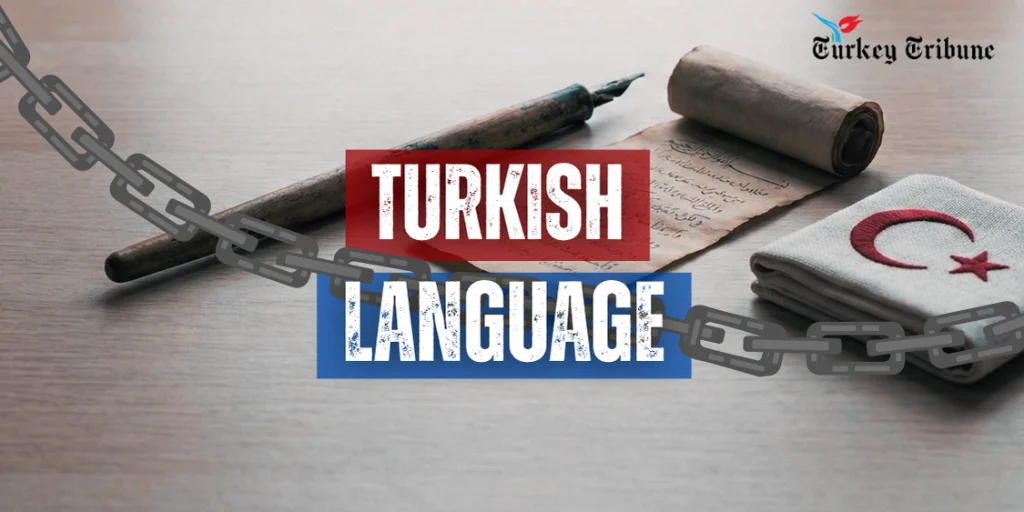
One of the greatest calamities inflicted upon the Turkish nation in history is the blow dealt to its language over the last half-century. The planned and insidious name of this blow is “Öztürkçecilik” (Turkish Purism). In reality, this movement creates an artificial Turkish that pushes the language away from its roots. As this artificial Turkish spreads rapidly, earlier complaints about grandparents and grandchildren not understanding each other now extend to fathers and children.
The Turkish language of the 1920s was genuine and rich. Poets and writers like Yahya Kemal (a leading modern Turkish poet) and Peyami Safa (a major novelist of psychological and cultural themes) used it with mastery. Between 1930 and 1950, however, the trend of artificial Turkish gained influence. When Adnan Menderes took power in 1950, the nation returned to the rich language of the 1920s. After the 1960 coup, the state revived and promoted the artificial language again.
How Turkish became disconnected from its heritage
Thirty to forty years ago, several valuable literary figures fought against artificial Turkish. Yet today, Turkish remains abandoned and weakened. The language has become poor, almost tribal. Young people cannot read or understand books or newspapers published before 1950. In contrast, a young French reader understands Victor Hugo, a young English reader reads Shakespeare, and a young Russian follows Tolstoy.
Until the early twentieth century, the entire Turkic world used the same alphabet and shared the same language. A person could travel from the Adriatic to the Great Wall of China speaking Turkish. Newspapers from Istanbul were readable in Crimea, Kazan, Baku, Tashkent, and Kashgar, and the opposite was also true.
Supporters of Turkish Purism show no reaction to thousands of French and English words in Turkish. However, they display hostility toward Arabic and Persian words that lived in Turkish for centuries. They continue to invent new forms. Their real aim is to separate the Turkish nation from its history, the Turkic world, and the Islamic world.
Today, nearly seven thousand French derived words remain in daily use. These include “aktif, avantaj, bagaj, branş, endüstri, kampanya, kontrol, departman, alternatif, direkt, liberal, pozitif, sosyal, reklam, roman.” Purists avoid none of these. Why, then, do they reject Arabic and Persian?
Warnings from thinkers and scholars
Prof. Dr. Ali Fuat Başgil (a major Turkish jurist and political thinker) explains that French contains Latin, Greek, and Frankish words. Yet no French citizen thinks of discarding them. English consists largely of French and German elements. Still, no English speaker proposes removing these roots.
It is tragic that today’s youth cannot understand Başgil’s book “Gençlerle Başbaşa” (A Chat with the Youth). Turkish youth of the 1960s and 70s read it easily. Today, publishers feel forced to simplify the text.
Prof. Dr. Ayhan Songar (a prominent Turkish psychiatrist and intellectual) notes that the 1890 Redhouse Dictionary recorded one hundred thousand Turkish words in active use. English had the same number at that time. Today, spoken Turkish has only about ten thousand words, while English has grown to one million.
Prof. Dr. Nuri Köstüklü (a scholar of Turkish education and cultural history) reports that American primary school textbooks contain over 71,000 words, German books 70,400, Japanese books 44,224, while Turkish textbooks contain only about 5,000.
Prof. Dr. William D. Templeman (an American linguist) states that children succeed academically when they possess a large vocabulary. Research in the United States consistently supports this.
The Turkic world never accepted artificial words
After the Soviet collapse, increased contact with the Turkic world revealed a striking fact. None of the artificial words created in Turkey forty or fifty years ago appear in the literature or speech of Turkestan, Azerbaijan, Crimea, Tatarstan, or the Balkans. Words such as “yanıt, kanıt, yapıt, sorun, olanak, öneri, gereksinim, bellek, birey, yaşam” remain unknown to them.
In recent years, however, some artificial Turkish has begun spreading to these regions through students studying in Turkey and through Turkish media.
Foreign scholars express concern
Foreign experts also question the rapid transformation of Turkish. Prof. Dr. Fritz Neumark (a German economist who taught in Istanbul for many years) returned in the 1960s and noticed the drastic change. After an assistant asked him a question, he replied, “I cannot understand your question anymore. How can a nation produce lasting works if its language changes every few years?”
Dr. Margaret Bainbridge (a linguist at the University of London) expressed similar concerns. She asked Nihat Sami Banarlı which Turkish she should teach in England. She argued that the Turkish spoken forty or fifty years earlier was coherent and beautiful, while the new form had lost its sound and style.
Geoffrey Lewis (a renowned Oxford professor) analyzed the issue in his book “The Turkish Language Reform: A Catastrophic Success.” He wrote that Turkey is unique among nations because it disconnects younger generations from older ones through language reforms.
French Turcologist Prof. Carlier asked poet and novelist Atilla İlhan (one of Turkey’s leading literary figures), “What have you done to your language?” When İlhan explained the reform, Carlier said that it is natural for Turkish to contain Arabic and Persian, just as Western languages contain Greek and Latin. According to him, the real problem lies in removing historical layers, not preserving them.
Atilla İlhan insisted that young people should learn Ottoman Turkish, just as they learn English. Western youth can read centuries old texts, while Turkish youth cannot read works from fifty years ago.
Anar Rızayev (a leading Azerbaijani writer and head of the Writers Union) pointed out a similar irony. He said, “I can read and understand the diwan of Yunus Emre, but I cannot understand its preface.”
The deeper cultural risk
Prof. Dr. Necmettin Hacıeminoğlu (a major Turkish linguist) warned that the post 1960 simplification movement became a cultural demolition. He believed the collapse of Turkish would accelerate if nationalists failed to resist.
Prof. Dr. Faruk K. Timurtaş (a historian of Turkish and Ottoman language) described language as a matter of national defense. He argued that a nation protects its homeland, history, customs, and identity through its language.
Prof. Dr. Mehmet Kaplan (a foundational scholar of Turkish literature) warned that while Soviet policies divided Turkic dialects into separate languages, Turkey risked dividing its own national language internally.
Prof. Dr. Muharrem Ergin (an expert in Turkish linguistic history) compared discarded words to fallen soldiers and argued that Turkish must be saved for Turkey to survive.
Peyami Safa stated that a nation may lose territory and regain it, but a nation that loses its language loses everything.
Prof. Dr. Musa Tosun argued that hostility toward Arabic rooted words came not from linguistic concerns but from cultural motives. He claimed that this hostility aimed to disconnect young people from their ancestors.
Necip Fazıl Kısakürek (a major Turkish poet and thinker) warned that forced interventions in language damage a nation’s intellectual foundation. Goethe and Bossuet expressed similar concerns centuries earlier.
Cemil Meriç (a leading Turkish intellectual) said that the dictionary forms the memory of a nation. He noted that even the French Revolution, despite its destruction, respected the dictionary.
A call to preserve linguistic continuity
The essential issue for our nation’s survival is the “national language.” Our state must revive the genuine Turkish language in textbooks and radio-television programs. Otherwise, our language, which is the fundamental element of our national unity, will disappear, and serious intellectuals, writers, and poets will no longer emerge.