

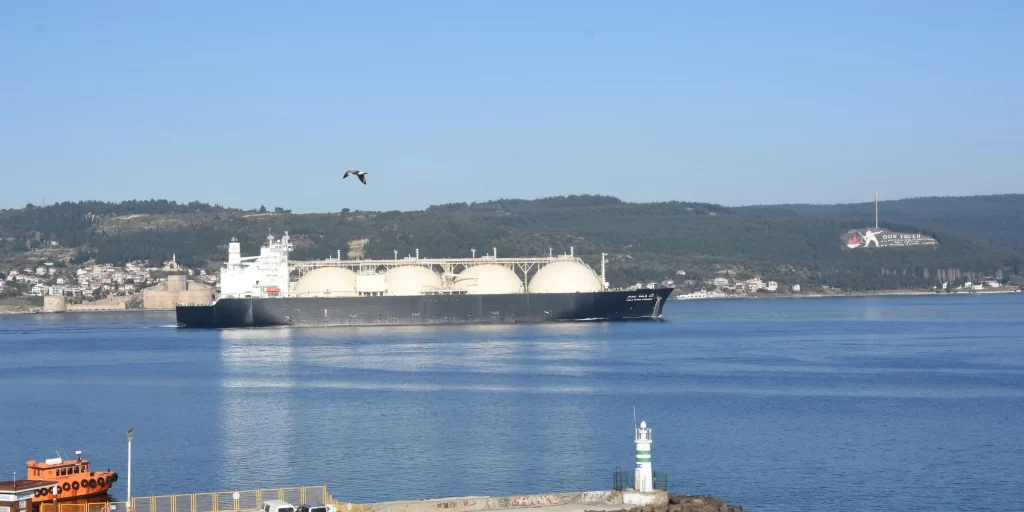
Turkey’s energy imports leave a clear mark on the current account. When oil and gas are expensive, the gap widens; when prices ease, tourism and services help narrow it. This piece asks how energy imports shape the current account across cycles—and what policy and firms can do.
Turkey’s current account data for July 2025 arrived with a monthly surplus, while annualized figures show how services cushion energy’s drag. Policymakers are expanding renewables, storage, and (soon) nuclear, aiming to lower exposure to fuel price swings. For companies, efficiency and smarter procurement can hedge costs that flow directly into the external balance.
What the numbers say
CBRT’s July 2025 release reports a monthly surplus (~$1.77bn), with annualized tables showing a services surplus near $62bn offsetting a goods deficit of roughly $63bn. Excluding gold and energy, the current account is firmly in surplus—underlining how imported fuels drive the external gap.
Energy’s weight is structural. In 2023, oil and natural gas together supplied more than half of Türkiye’s total energy, and the economy remains heavily reliant on imported fuels (oil 29% and gas 26% of total energy supply in 2023). That reliance ties the current account to global commodity cycles.
The price channel: from 2022 shock to 2025 relief
The 2022 energy shock pushed Brent well above its pre-crisis range, inflating Turkey’s energy bill. As markets loosened, the IEA flagged a supply surplus outlook for 2025–26, helping keep oil prices lower than crisis peaks. A softer oil tape typically narrows Turkey’s external deficit—especially when paired with strong tourism receipts.
Natural gas matters twice: as a direct import and via electricity generation costs. IEA’s latest gas outlook notes slower demand growth in 2025 as prices normalized from 2022 extremes. Lower, less volatile gas prices reduce the import bill and ease pressure on the balance of payments.
Policy levers: renewables, efficiency, storage, nuclear
Renewables and grid build-out. Ankara plans a major scale-up of wind and solar to 120 GW by 2035, alongside transmission upgrades. More domestic generation displaces fuel imports over time and stabilizes energy costs for industry.
Gas storage and flexibility. Storage raises resilience to price spikes. Türkiye expanded Silivri and Tuz Gölü and targets ~14.4 bcm of underground storage capacity by 2028, improving seasonal balancing and procurement optionality (pipeline vs. LNG).
Nuclear diversification. The Akkuyu plant is nearing commissioning of its first reactor, with additional units slated through 2028. Nuclear adds a large, fuel-secure baseload source that reduces import exposure over the medium term.
Market facts. EMRA/EPDK’s 2024 market reports confirm a large, price-sensitive gas system—about 50 bcm consumption in 2023—where Botaş and LNG capacity provide flexibility but also import exposure.
What businesses can do (and why it helps the BoP)
Cut demand with efficiency. The national efficiency strategy to 2030 and new Green Industry programs (with KOSGEB/World Bank support) subsidize upgrades like high-efficiency motors, heat recovery, and process optimization. Efficiency lowers firms’ energy bills and, in aggregate, the country’s import need.
Lock in prices with clean PPAs. Corporate power-purchase agreements for wind/solar can hedge electricity costs. Regulations and incentives for distributed renewables (e.g., licensed thresholds, exemptions) support on-site and near-site projects.
Use LNG–pipeline optionality and demand response. Larger buyers can time purchases, shift loads, and participate in demand management. Analyses of Türkiye’s gas market highlight growing flexibility from storage and LNG regas capacity—tools that, when used well, dampen cost volatility that feeds the current account.
Peer check. Countries that lower energy intensity faster tend to face milder external gaps during price spikes. Recent datasets (IEA/World Bank via Our World in Data) show sustained declines in energy intensity since 2010 across Europe; Poland’s rapid shift toward cleaner power is one example of a trend that eases import exposure.
Turkey’s external position swings with energy prices, but the arc is bending toward less vulnerability. A larger services surplus, accelerating renewables, bigger storage, and nuclear all point the same way. The open question: can policy and firms scale efficiency and clean power fast enough to make the next oil-and-gas up-cycle less painful?