

The latest report from the Stockholm International Peace Research Institute (SIPRI), published on March 10, reveals that Europe’s efforts to reduce its dependence on U.S. defense capabilities remain a challenging task.
Europe’s Struggle for Defense Autonomy
European nations are increasingly taking unprecedented steps in defense spending. Among these efforts is the attempt to decrease reliance on Washington, a move influenced in part by former U.S. President Donald Trump’s policies.
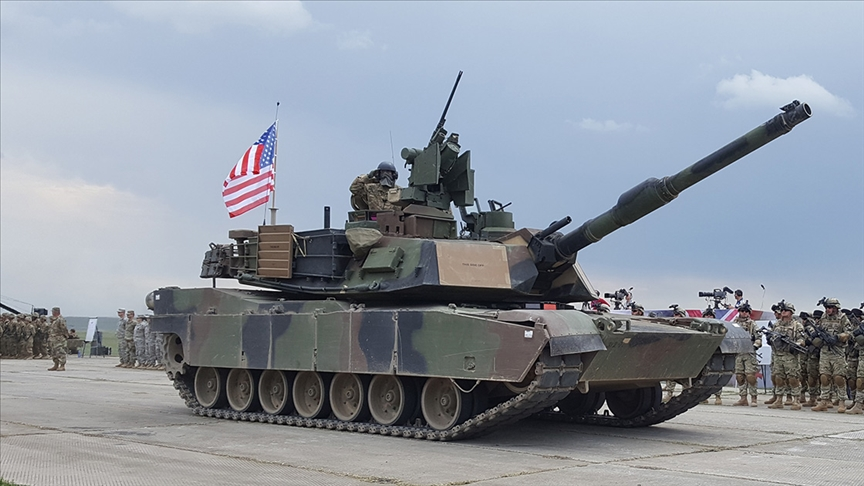
According to the report, European countries remain significantly dependent on American-made weaponry. From 2020 to 2024, 64% of the imported arms by NATO’s European members came from the U.S. This marks an increase from the 52% recorded between 2015 and 2019.
U.S. Dominance in the Global Arms Market
The United States remains the leading global arms supplier. Its share of worldwide arms exports increased from 35% in 2015-2019 to 43% in the last four years. Notably, for the first time in two decades, Europe (35%) has overtaken the Middle East (33%) as the largest recipient of U.S. weapons.
Fear of U.S. Policy Shifts
Trump’s suspension of military aid to Ukraine after a dispute with President Volodymyr Zelensky raised concerns across Europe. The fear that Washington might take similar actions against European allies has fueled discussions on reducing dependency on American defense support. However, as SIPRI’s findings suggest, achieving this goal is far from immediate.
U.S. Leverage Over European Defense
The U.S. enjoys technological and logistical supremacy in defense, granting it significant leverage over European military capabilities. Several key weapon systems illustrate this dependency:
- F-16 fighter jets cannot be transferred to third-party nations without U.S. approval.
- Patriot missile defense systems require U.S. missile support to function effectively.
- HIMARS missile systems rely on GPS coordinates controlled by the U.S.
- F-35 fighter jets can be technically grounded by the U.S. if necessary.
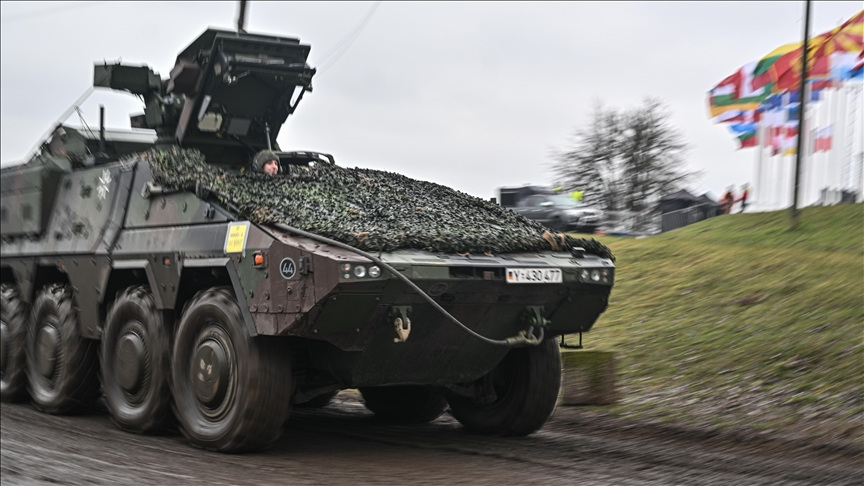
Historically, European countries have operated within the framework of alliances and strategic principles. However, recent developments suggest an increasing urgency to diversify and strengthen Europe’s defense sector.
Will Europe Continue Buying U.S. Weapons?
Despite growing calls for defense independence, many analysts believe Europe will remain a key buyer of American arms. Pieter Wezeman, Senior Researcher at SIPRI’s Arms Transfers Program, notes that while Europe is making efforts to strengthen its arms industry, deep-rooted transatlantic defense ties persist. NATO nations in Europe have ordered approximately 500 U.S.-made fighter jets, among other weaponry.
France and Italy Rise in Arms Exports
SIPRI’s data highlights France as the leading arms exporter within the European Union. Surpassing Russia, France now ranks second globally after the U.S. Between 2020 and 2024, French arms exports to other European nations surged by 187%, driven largely by sales to Greece, Croatia, and Ukraine. India and Qatar remain France’s top buyers.
Italy also recorded a significant increase in arms exports, rising from 10th to 6th place globally, with a 138% surge in sales. Poland, another emerging arms exporter, saw an astonishing 4031% increase in its weapons trade.
Europe’s Leading Arms Importers
The United Kingdom tops the list of arms buyers in Europe, followed by Poland, which registered a 508% increase in arms imports. The Netherlands ranks third, while Italy saw the sharpest decline, with a 27% reduction in imports.
Unsurprisingly, the highest arms importer in Europe over the past four years has been Ukraine, whose imports surged by an unprecedented 9627% due to the ongoing war with Russia.
Turkey’s Rising Arms Exports
Turkey has become a significant player in the global arms market, as reflected in SIPRI’s findings. From 2015 to 2019, Turkey’s share in global arms exports was 0.8%. However, between 2020 and 2024, this figure more than doubled to 1.7%, marking a 103% increase. Turkey now ranks 11th among the world’s top 25 arms exporters.
The top importers of Turkish arms during this period were the United Arab Emirates, Pakistan, and Qatar. Meanwhile, Turkey’s arms imports dropped by 33%, reducing its share of global arms imports to 1.1%.
Turkey’s Strategic Expansion in Africa
Turkey’s diplomatic engagements in Africa are also reflected in its arms trade. As security concerns have escalated, West African nations have doubled their arms imports compared to the 2015-2019 period. Turkey is now among the top three suppliers to the region, alongside China (26%) and France (14%), with Turkey and Russia each holding an 11% share.
Russia’s Decline in Arms Sales
Russia’s arms exports have faced a dramatic decline, dropping by 62% according to SIPRI. Experts attribute this to the Ukraine war, which has increased Russia’s domestic demand for military equipment, alongside Western sanctions restricting its arms trade. Russia remains a key supplier to India (38%), China (17%), and Kazakhstan (11%), but its influence is waning in the global market.
The Future of European Defense
As geopolitical tensions persist, Europe faces a critical decision: continue relying on U.S. military support or accelerate efforts toward defense self-sufficiency. While transatlantic defense ties remain strong, the push for European defense autonomy is gaining momentum. The coming years will reveal whether Europe can break free from U.S. dominance or remain a key player in Washington’s strategic defense network.