

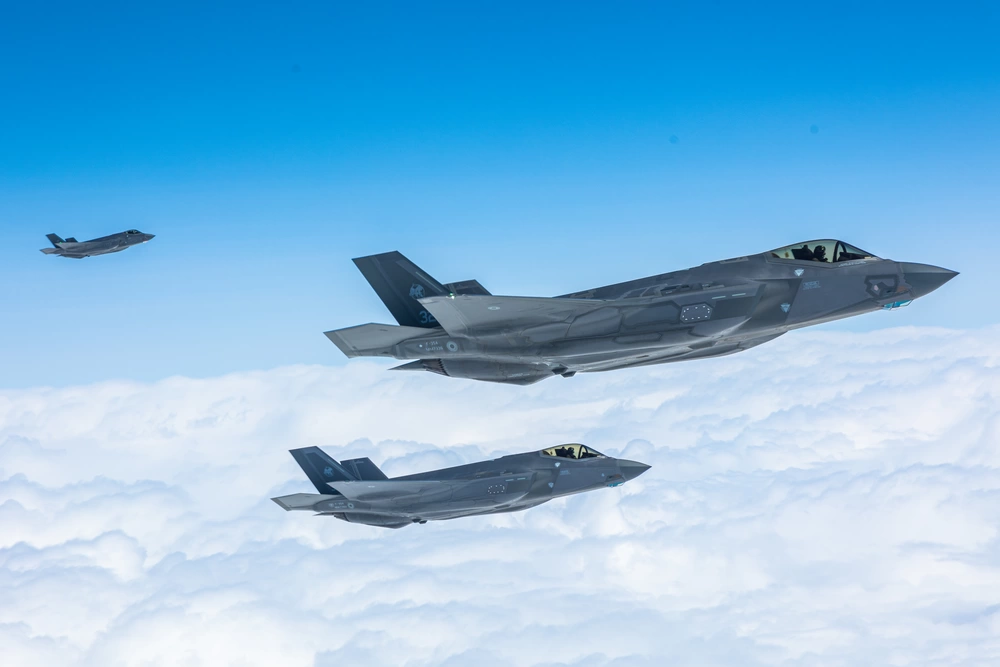
Greek-American Lawmakers Resist F-35 Sales to Turkey
A group of Greek-American members of the U.S. Congress is pressing former President Donald Trump to maintain Turkey’s suspension from the F-35 fighter jet program. Their call comes amid renewed talks about Turkey’s potential return to the U.S.-led defense initiative.
The bipartisan group—Representatives Gus Bilirakis (R), Nicole Malliotakis (R), Dina Titus (D), and Chris Pappas (D)—released a joint statement warning that Turkey’s reentry into the F-35 program would “violate U.S. law” and “compromise sensitive military technology.” The statement was made just days before Turkish President Recep Tayyip Erdoğan’s scheduled meeting with Trump at the White House.
According to the lawmakers, any negotiation involving Turkey and the F-35 Joint Strike Fighter must consider the security risks and legal implications involved.
The S-400 Missile Deal: A Persistent Roadblock
The lawmakers argue that Turkey’s purchase of the Russian S-400 missile defense system remains a central barrier to its participation in the F-35 program. They cited the Countering America’s Adversaries Through Sanctions Act (CAATSA), which led to Turkey’s removal from the program in 2019.
They stressed that Turkey’s collaboration with Russia undermines NATO defense cohesion and poses a direct threat to U.S. military technology.
“Allowing Turkey access to next-generation military platforms like the F-35 while it retains the S-400 system could expose critical U.S. defense secrets to Russian intelligence,” they stated. The group also expressed concern that such a move could harm trust among NATO allies.
American Hellenic Institute Ramps Up Pressure
Beyond Congress, advocacy groups like the American Hellenic Institute (AHI) are also voicing strong opposition to any arms deals with Turkey. AHI President Nick Larigakis recently sent a letter to Donald Trump, urging him to reject both F-16 and F-35 sales to Ankara.
Larigakis claimed that Turkey’s foreign policy and regional military actions run counter to U.S. strategic interests. He urged Washington to respond firmly and publicly, emphasizing that holding Turkey accountable would better align with American national security priorities.
The AHI also warned that Turkey’s actions, including those in the Eastern Mediterranean and Syria, continue to destabilize the region and should not be rewarded with advanced weapons technology.
A Complex Defense Dilemma for the U.S.
Turkey’s exclusion from the F-35 program reflects deeper tensions in U.S.-Turkey relations. As a NATO member, Turkey plays a strategic role. However, its military partnership with Russia continues to raise red flags in Washington.
While some U.S. policymakers support rebuilding ties with Ankara, others view such moves as risky. The F-35 debate symbolizes broader questions about alliance loyalty, defense integrity, and global power balances.
As Erdoğan seeks renewed access to American defense assets, the outcome will signal how the U.S. balances diplomacy, defense, and law in a rapidly changing geopolitical landscape.