

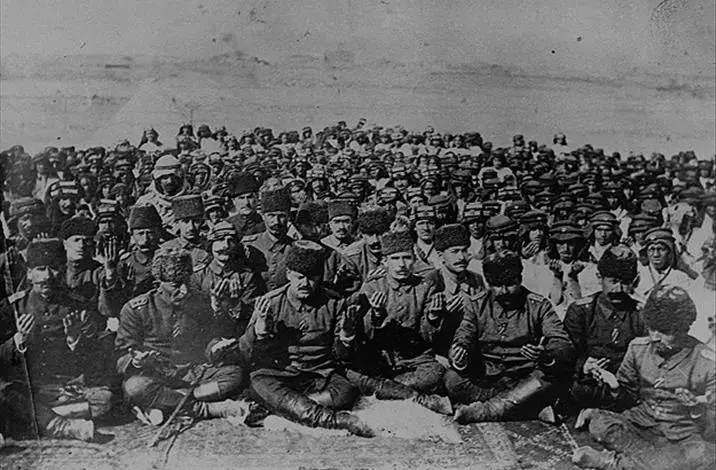
The Spirit Behind the Gallipoli Victory
In the final years of the Ottoman Empire, the Gallipoli Campaign was both a victory and a tragedy. More than 250,000 Ottoman soldiers were martyred—many of them young lieutenants and sub-lieutenants trained under Sultan Abdülhamid II. Even high school students went to war. For this reason, Istanbul High School and several schools in Anatolia had no graduates in 1914–1915.
The soldiers who died in battle left behind heartbreaking letters. As Turkey recently commemorated the 110th anniversary of the Gallipoli Land Battles, the last letters sent by three Ottoman officers—First Lieutenant Zâhid Efendi from Gümüşhane, Captain M. Tevfik from Istanbul, and Hasan Ethem, a teacher and sub-lieutenant from Niğde—invite deep reflection on faith, duty, and love.
Letters That Reveal Faith and Devotion
When these letters are carefully examined, their literary beauty becomes clear. More importantly, they show how deeply Ottoman soldiers were devoted to their religion, homeland, and families. Despite wars and social hardships, the Ottoman Empire had instilled a powerful sense of spirituality in its youth.
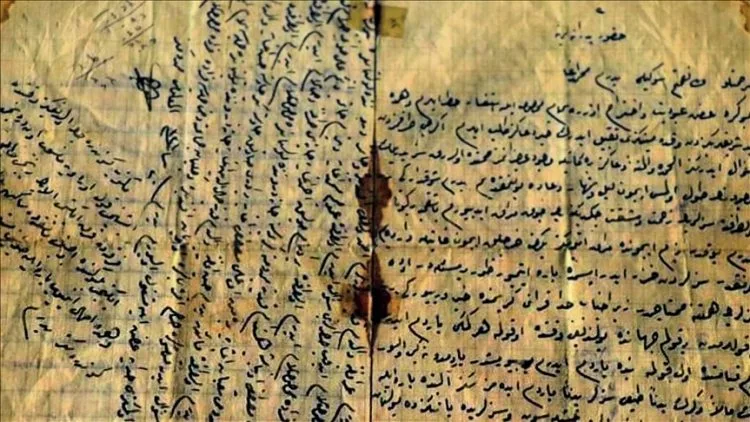
The Farewell of First Lieutenant Zâhid Efendi to His Wife
“Dear my beloved wife Hanife Hanim,
Today, mobilization has been declared. I am a soldier proud of my profession. I go now to defend my beloved homeland. Perhaps I will not return—or will not find those I left behind. Yet such things are part of life. Writing this will does not mean I will die immediately, for our faith is certain.Divine destiny brought us together from distant lands. Our marriage was made in obedience to Allah’s command and the Prophet’s words. I have always worked to provide for you. If our homeland calls for war and I fall as a martyr, you must take your deferred dowry (mehr-i müeccel) from my property and estate. If these are insufficient, I entrust it to your pure conscience. I am sure you will not leave me in debt.
I will not write about the promise we gave each other verbally. I trust you will not depart from it. Please recite a Mawlid-i Sharif for my soul, for I have no other request. Martyrdom is enough for me.
If you cry aloud when you receive this will, you will not have my consent.
Your husband, Zâhid (August 3, 1914)”
(In Islam, it is obligatory to write a will before death. The term “mehr-i müeccel” refers to the dowry a husband owes his wife. In this letter, Lieutenant Zâhid Efendi politely asks his wife to forgive any remaining part if his property is insufficient. The phrase about the verbal promise implies their deep love and an agreement that if one dies, the other will not remarry.)
The Letter of Captain M. Tevfik from Istanbul
“Dear Father and Mother,
In my first fierce battle at Arıburnu, a treacherous British bullet passed through my side and trousers. Praise be to Allah, I survived. Yet since I have little hope of surviving future battles, I write these lines as a keepsake.
Thanks be to Allah who raised me to this rank and made me a soldier. You, my parents, raised me to serve our sacred religion, homeland, and nation. I am grateful to Allah and to you. Now it is time to repay what my nation has given me. If I attain martyrdom, I will believe that I have become one of Allah’s beloved servants.
Dear Father and Mother, I entrust my beloved wife Münevver and my son Nezih first to Allah’s protection, and then to yours. Please help her raise our son as a righteous Muslim. We have little wealth, and I cannot ask for more.
Give the attached letter to my wife personally but gently, for she will be deeply grieved. Comfort her. Pay attention to the notebook I added regarding my debts. Those recorded in her memory or notebook are also valid.
My dear sister Lutfiye, you know I loved you deeply. If I have wronged you, forgive me. Pray five times a day, never miss a prayer, and read Fatiha for my soul. I entrust you all to Allah’s grace. Farewell, farewell!
Your son, M. Tevfik (May 18, 1915)”
The Letter of Hasan Ethem, Teacher and Sub-Lieutenant from Niğde
“My dear mother, glorious Turkish mother proud to have given birth to four soldiers!
I received your letter of advice while sitting under a pear tree beside a stream in a green meadow. Surrounded by nature, my spirit grew stronger as I read your words. I looked around—the crops bowed with the wind as if saluting your letter; the pines and the rushing stream seemed to share my joy. Even the nightingale sang for me.
Do not be sad, Mother. I will bring you here someday to see this beauty with Şevket and Hilmi as well.
On the dark green side of the meadow, my soldiers were washing their clothes. A man with a beautiful voice began to recite the call to prayer. O Allah, how beautiful it sounded! Even the nightingale fell silent; the crops stopped moving; the stream made no sound. Everything listened to that sacred voice. After the prayer, I performed ablution, prayed, and raised my hands to the sky:
‘O my Rabb (Allah)! Creator of the singing bird, the wandering sheep, the green crops, and the mighty mountains! You gave all these to the Turks. Leave them with the Turks who glorify You. The wish of these brave soldiers is to make Your name known to the English and the French. Grant us this honor and sharpen our bayonets. Annihilate our enemies whom You have already crushed!’
With these words, I prayed and rose. None could be happier than I was at that moment.
Your son, Hasan Ethem (April 17, 1915)”
The Legacy of Faith and Patriotism
The victory at Gallipoli was won through this spirit of courage, faith, and love. Countless soldiers were lost, yet the superior enemy forces were defeated on land and sea. This final Ottoman victory boosted the morale of both the Turkish nation and the Islamic world.
If schools in Turkey instill moral awareness and love for the homeland in Muslim youth today, even greater victories can be achieved. For, as Prophet Muhammad (peace be upon him) said: “Love for one’s homeland is part of faith.”