

Ottoman soldiers Gallipoli letters
Over 250,000 of our soldiers were martyred at Gallipoli. Many of them were young officers and reserve commanders raised during the reign of Sultan Abdulhamid II. What remains of them are heartbreaking letters. Among these, three stand out—letters that compel us to reflect.
The letters of Ottoman officers reveal just how deeply people of that time were devoted to their religion, their homeland, and their families.
Even in its final years, the Ottoman Empire managed to instill strong spiritual values in its youth.
A victory was perhaps won during the Gallipoli Campaign, fought in the dying days of the Empire—but the price was steep: more than 250,000 lives. Many of those who died were young men shaped by the moral and educational legacy of Abdulhamid II. Even high school students went to war. So much so that in 1914 and 1915, some high schools in Istanbul and Anatolia had no graduates at all.
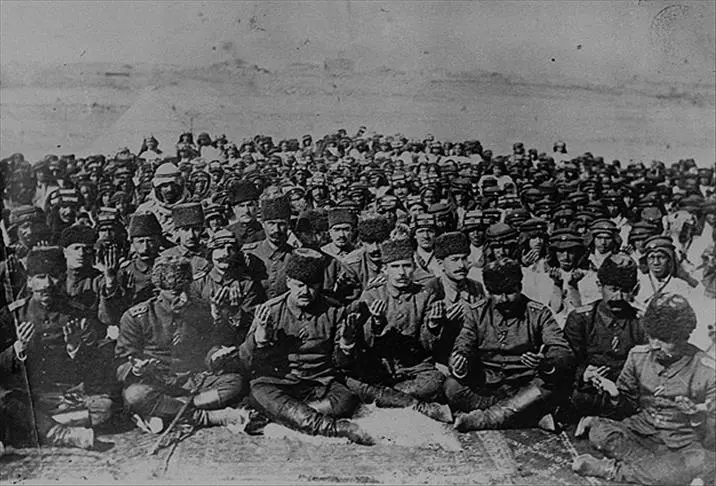
What’s left from those martyred in Gallipoli are letters that grip the heart. As we recently marked the 110th anniversary of the Gallipoli land battles, reading the farewell letters of three Ottoman officers—Lieutenant Zahid Efendi from Gümüşhane, Senior Lieutenant M. Tevfik from Istanbul, and Reserve Officer Hasan Ethem, a teacher from Niğde—offers us not only emotion but a moment of deep thought.
Presented below in simplified language, these letters show both literary elegance and a sincere reflection of the soul. They testify to the unwavering love these martyrs held for their faith, their homeland, and their families. Despite all the wars and the social troubles of its final years, the Ottoman State continued to raise a generation rich in spiritual depth.
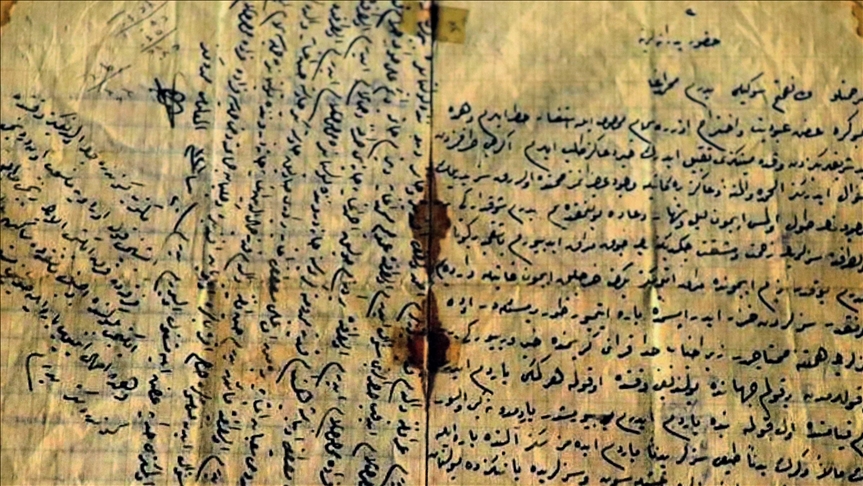
LETTER FROM LIEUTENANT ZÂHID EFENDİ TO HIS WIFE
To my wife, Hanife,
- Today, mobilization was declared. I am a soldier proud of his profession.
- As a soldier, I now go to defend my beloved country. It’s possible I may never return, or if I return, things may not be as I left them. Such is the nature of life.
- But just because I’m writing a will doesn’t mean I expect to die right away. My faith is firm.
- By the will of our Lord, though we didn’t know each other before, fate brought us together from faraway places. We were married in accordance with Allah’s command and the words of His Prophet. As long as I lived, I tried to provide for you. But now that our state has declared war and I may be martyred proudly in defense of my homeland, I must fulfill the requirements of Islamic law. In that case, I appoint you as my legal representative to collect your deferred dowry from my possessions and real estate. If it’s not enough, I leave the rest to your pure conscience. I know you won’t leave me indebted in the grave.
- I won’t write more about your future decisions. I hope and trust that you’ll keep the vow we made face-to-face. I ask you, from your heart, to recite a Mawlid for my soul. I ask for nothing else. Martyrdom is enough for me.
- If you cry aloud upon reading this will, know that you will not have earned my blessing.
Your husband,
Zahid
(3 August 1914)
(Note: In Islam, writing a will before death is a religious duty. The term “deferred dowry” refers to the amount a husband owes his wife upon marriage but pays only upon death or divorce. Zahid Efendi delicately asks his wife to forgive any remaining balance if his estate cannot cover it.)
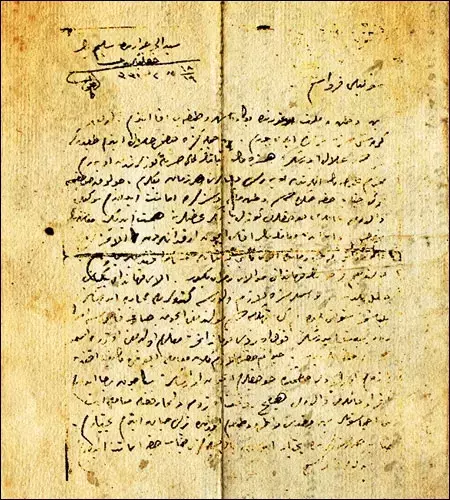
LETTER FROM SENIOR LIEUTENANT M. TEVFIK TO HIS FAMILY
My dear father and mother,
In the fierce battle at Arıburnu, a treacherous British bullet grazed my right side and tore my trousers. Thank Allah I survived. But I’m not so sure I’ll survive the next battle. So I write these lines as a keepsake.
Praise be to Allah, who brought me to this rank. And by His divine decree, I became a soldier. As my parents, you raised me in the best way you could—to serve our sacred religion, our homeland, and our nation. You were the source of my blessings and my life. I thank Allah and I thank you.
Now it is time to earn the money the nation has spent on me. I am trying with all my might to fulfill my religious and national duty. If I attain martyrdom, I will consider it a sign that I was among Allah’s beloved. As a soldier, I know this is always near.
I entrust my beloved wife Münevver and my son Nezih first to Allah, then to your care.
Do for them whatever you can. Please help raise my son to be a righteous Muslim. You know we have no wealth, so I can’t ask for anything beyond what’s possible. Even if I did, it would be meaningless.
Please hand the enclosed letter to my wife yourself. She will surely be deeply saddened. Try to console her. This was Allah’s decree.
Pay close attention to the notebook I’ve included about my debts and loans. Münevver might have them written in her notebook or memory as well. The letter I sent her includes more details—please ask her about it.
My dear parents, I may have wronged you unknowingly. Please forgive me. Make peace with my soul and help my wife settle any affairs.
My beloved sister Lütfiye,
You know how much I loved you. I always wanted to do whatever I could for you. If I’ve wronged you, forgive me. Let your heart be at peace and pray for my soul. Help your sister-in-law and my son Nezih. Pray all five daily prayers without fail. Always be mindful not to miss a single one. Recite al-Fatiha for my soul.
I entrust you all to Allah’s mercy and protection.
To my relatives and friends: Farewell. Please forgive me. I forgive you all from the bottom of my heart.
Farewell, farewell. I leave you in Allah’s care.
Your son,
M. Tevfik
(18 May 1915)
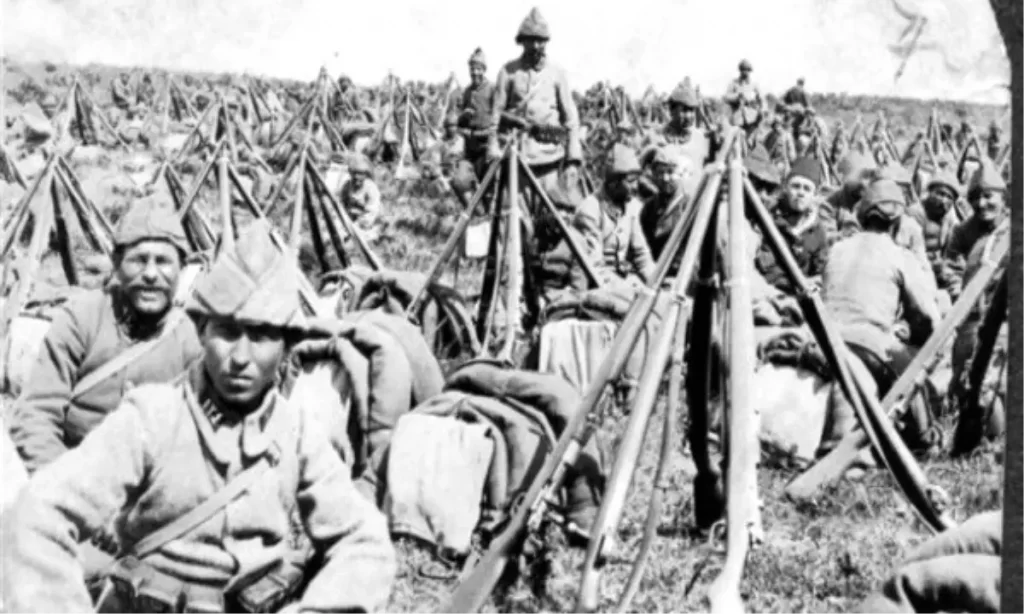
LETTER FROM RESERVE OFFICER & TEACHER HASAN ETHEM TO HIS MOTHER
Dear Mother,
You are a proud Turkish mother who raised four soldiers! I received your letter of advice while sitting beneath a pear tree by the stream that runs through the green valley of Divrin. Surrounded by nature’s beauty, your words strengthened my spirit. I read your letter, again and again, drawing lessons each time and I felt joy knowing I was fulfilling such a noble duty.
I looked out at the fields. The wind bent the green crops as if they were bowing to salute your letter. They swayed back and forth, congratulating me. I looked to the hillside where tall pine trees rustled in their own way, celebrating your message. To the left, the rushing stream sparkled and laughed with joy at your words.
Above me, the leaves of the tree I rested under danced as if they too shared my happiness. A nightingale sang sweetly on one branch—its soft voice echoing the feelings you stirred in me. But Mother, please don’t be saddened. I will bring you here one day. I’ll show you this place. Şevket and Hilmi will see it too, thanks to you.
The Call to Prayer and My Prayer
On the darker green side of the meadow, my soldiers stood in neat rows washing their clothes. One with a beautiful voice began the adhan—the Islamic call to prayer. My Lord, how beautiful it sounded in that valley. Even the nightingale fell silent. The crops stopped moving. The stream quieted.
Everything—everyone—paused to listen to that sacred sound.
I took ablution from that same stream. We prayed in congregation on the grass. I forgot the chaos and pomp of the world. I raised my hands to the sky and said:
“O Almighty Lord! Creator of these singing birds, these grazing sheep, these bowing crops, and these majestic mountains! You gave all this beauty to the Turks—please let it remain with the Turks. Such sacred lands belong only to those who glorify and honor You.
O Lord! These brave soldiers only wish to show Your name to the English and the French. Grant us this honor. Strengthen our bayonets. You have already defeated our enemies—now destroy them completely!”
Then I stood up. I don’t think anyone in the world could feel more joyful than I did in that moment.
Your son,
Hasan Ethem
(17 April 1915)
The Gallipoli victory was won through this spirit—through love, faith, and perseverance. Many lives were lost. Yet, the mighty invading forces were defeated both on land and at sea. This final victory of the Ottoman Empire brought renewed morale to the Turkish nation and the Muslim world.
If today’s Muslim youth in Turkey are taught spiritual awareness and love for their homeland, even greater victories will follow.
After all, as the Prophet Muhammad (peace be upon him) said:
“Love of the homeland is part of faith.”
Written by Numan Aydoğan ÜNAL