

Paid Human Hunting: ‘Sniper Tourism’ During the Bosnian War
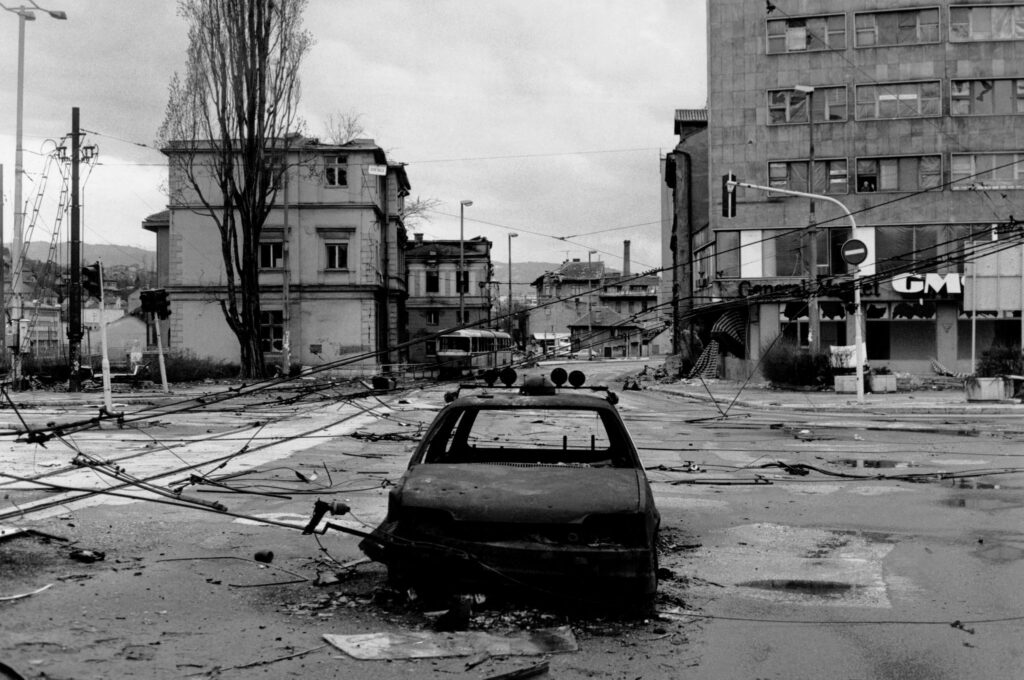
The siege of Sarajevo, which lasted from 1992 to 1996, stands as one of the longest and most brutal urban sieges in modern European history. More than ten thousand civilians were killed; the city was slowly crushed under the fire of artillery positions and the lethal patience of snipers stationed on surrounding hills and in high-rise buildings. The main boulevard – soon known as Sniper Alley – became a corridor where every attempt to cross resembled a deadly coin toss.
Recently, a darker and previously unexamined layer of this already devastating history has re-emerged. New legal action in Italy has revived allegations that, during the siege, wealthy foreign visitors were escorted to sniper positions overlooking Sarajevo and allowed to fire on civilians for money – turning human life into a form of “sniper safari.” These claims resurfaced after the 2022 documentary Sarajevo Safari, and by 2025 they had become the subject of an official criminal investigation by the Milan Prosecutor’s Office.
This article examines the evidence behind these allegations, traces their historical trajectory, and discusses what such a practice – if confirmed – would mean in both legal and moral terms.
What Is the “Sarajevo Safari”? Documents, Testimonies, and Early Reports
The term Sarajevo Safari entered public consciousness largely through the 2022 documentary by Slovenian director Miran Zupanič. The film presents interviews with former Bosnian Serb soldiers and individuals allegedly involved in escorting foreign “guests” to frontline sniper positions. According to these accounts, wealthy civilians – reportedly from Italy, the United States, Canada, and Russia – paid to be taken to positions above besieged Sarajevo, where firing on inhabitants was offered as a grotesque form of entertainment.
These accusations are not entirely new. As early as the mid-1990s, several Italian newspapers, including Corriere della Sera, reported rumors that Italian far-right extremists traveled to Bosnia and joined sniper units, firing on civilians. At the time, such claims were not formally investigated.
A more concrete reference emerged in 2007 during proceedings at the International Criminal Tribunal for the Former Yugoslavia (ICTY). An American former Marine and firefighter, John Jordan, testified under oath that he had seen “non-local visitors” brought to sniper positions as “guests,” implying a recreational or paid dimension to their presence.
In short, the historical trail consists of:
• Rumors circulated in the 1990s
• Formal testimonies recorded by ICTY in the 2000s
• Documentary interviews released in 2022
• A slow-moving investigation by Bosnian prosecutors
• And finally, a 2025 Italian criminal case now attempting to identify specific individuals and actions
Together, these elements form a pattern too persistent to dismiss outright, yet still incomplete and surrounded by uncertainty.
The Italian Investigation: A Legal Pursuit of “Human Safaris”
In November 2025, major international outlets – led by The Guardian – reported that the Milan Prosecutor’s Office had opened a homicide investigation into alleged “sniper tourism” in Bosnia during the war.
The case originated with a detailed criminal complaint submitted by Italian journalist Ezio Gavazzeni and former judge Guido Salvini. Their 17-page dossier alleges that several Italian citizens were transported in the 1990s from Trieste to Belgrade, then to sniper positions overlooking Sarajevo, where they fired at civilians. Some reports claim that these “packages” cost the equivalent of €80,000–€100,000 today, and that shooting at children carried an even higher “price” – details so grotesque that they demand forensic scrutiny.
Italian media have also published testimonies claiming that these “tourist snipers” were sometimes seen with hunting rifles, wearing civilian clothes, and escorted by Serb soldiers or paramilitaries.
What makes this investigation particularly significant is its legal basis: prosecutors classify the alleged acts as aggravated, premeditated murder committed with cruelty, a crime that carries no statute of limitations under Italian law and can result in life imprisonment.
If evidence links specific individuals to these acts, Italy could prosecute war crimes committed more than three decades ago.
The Global Media Response: A New Reckoning or Another Sensational Wave?
The allegations have rapidly become a subject of international debate.
• The Guardian and The Independent have reported extensively on the suspected travel routes and payment structures.
• Al Jazeera published an analytical piece in November 2025, placing the claims within the broader context of stalled investigations in Bosnia and renewed pressure in Italy.
• The BBC updated its entry on Sniper Alley, referencing the Milan inquiry and noting that some British veterans deployed in Sarajevo said they had never encountered such activities – highlighting the unevenness of wartime memory.
• French media such as RTL and La Dépêche have covered the story under the title safaris humains, asking whether Europe could truly have hosted a “90,000 dollar human hunt.”
• German outlets, including Tagesspiegel, have discussed potential connections to both Italian nationals and elements within the Serb wartime leadership.
The widespread coverage suggests a growing recognition that the story – whether wholly accurate, partly distorted, or heavily mythologized – has become part of Europe’s unresolved moral landscape.
Between Evidence, Rumor, and Propaganda
Naturally, moral outrage should not overshadow the need for rigor. We must ask:
• What is established fact?
• What remains unproven allegation?
• What might be wartime propaganda or political opportunism?
We do possess:
• Formal investigations by Bosnian and Italian prosecutors
• ICTY testimony
• Documentary evidence and journalistic research
• Survivor accounts
• Statements by former soldiers and intelligence personnel
But at the same time:
• Officials from Republika Srpska denounce the documentary as “anti-Serb propaganda”
• Some Western soldiers posted in Sarajevo claim they never observed such activities
• The scale, frequency, and precise logistics of the alleged “safaris” remain unclear
Thus, the most intellectually honest position is this:
There appears to be a factual core to the allegations, but the full extent and organization of the practice remain undetermined.
The Milan investigation seeks to untangle exactly this: who paid, who escorted them, what institutional structures (if any) enabled the practice, and who knew.
Human Hunting and the Ethics of Recreational Killing
If even part of these allegations is verified, the moral stakes become stark.
Bosnia’s war already involved systematic violations of international humanitarian law – deliberate targeting of civilians, mass executions, ethnic cleansing, and sexual violence. These crimes are well-documented and affirmed by international courts.
But the Sarajevo Safari allegations introduce a darker dimension:
• Killing not for ideology or military strategy, but for entertainment
• Life reduced to an experience package
• Death turned into a purchasable thrill
• Violence commodified and exported to a global clientele
Philosopher Achille Mbembe’s concept of necropolitics – the power to dictate who may live and who must die – finds perhaps its most grotesque expression here: not merely an army deciding, but private individuals purchasing the right to kill.
Elsewhere in the world, the idea of “human safaris” has surfaced in non-lethal contexts – such as the Jarawa tribes of the Andaman Islands being displayed to tourists. Yet the Bosnian case, if true, represents its most lethal incarnation.
Memory, Justice, and the Risk of Sensationalism
Such stories risk collapsing into sensationalism, overshadowing the broader and fully documented atrocities committed during the war. More than 100,000 people were killed; countless others suffered in concentration camps and rape camps. These facts require no new revelations to be horrifying.
Yet the Sarajevo Safari allegations cannot be dismissed as mere tabloid fodder. They touch on a deeper question: how many layers of violence were hidden within the chaos of Bosnia’s war? How much cruelty remains unrecorded because it fell outside the categories that investigators were prepared to recognize?
Conclusion: Why It Matters Today
Justice often arrives late. And with every day it fails to come, the memory of the victims is left a little more deserted, a little more exposed to the slow erosion of silence. Whether these allegations are ultimately judged as exaggerations, verified through evidence, or partially disproven, the case known as the Sarajevo Safari demands an investigation that is precise, evidence-based, and free from political influence. Seeking the truth is not only a legal duty; it is an ethical necessity – a matter of human dignity that can no longer be postponed.
Thirty years after the war, survivors still live with the consequences. Many who ran across Sniper Alley as children, who lost limbs, parents, or futures, are alive today. The Milan investigation is, in part, a test of whether their suffering will be acknowledged in its entirety – or whether Europe will avert its eyes from the darkest possibilities of its own recent past.
Justice delayed is painful.
Justice denied is a betrayal.
But justice pursued – honestly, rigorously, without political convenience – remains the only path that honors the dead, protects the living, and prevents silence from becoming yet another form of violence.
Read more from Ömer Göral