

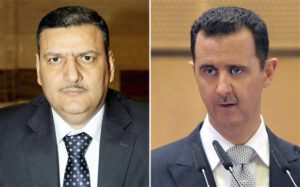
 Syrian Prime Minister Riyad Hijab has ceased the confrontation looking for overthrowing President Bashar al-Assad, a spokesman for Hijab told on Monday, noticing one of the greatest profile desertions from the Damascus government.
Syrian state television told Hijab had been dismissed, but an official source in the Jordanian capital Amman told he had been discharged only after he fled across the borderline with his family. “I declare today my desertion from the killing and violent regime and I declare that I have joined the ranks of the freedom and self-regard revolution,” Hijab told in a statement read in his name by the spokesman, which was broadcast on Al Jazeera television. “I declare that I’m from today a soldier in this blessed revolution.”
Syrian state television reported Hijab’s dismission as government forces looked to set up a ground assault to clear the confrontation from Aleppo, the country’s largest city. The confrontation Syrian National Council stated a further 2 ministers and 3 army generals had defected with Hijab. That affirmation could not straightaway be affirmed. Hijab was a top official of the ruling Baath Party but, like all other senior defectors so far from the government and armed forces, he was also a Sunni Muslim instead of a member of Assad’s Alawite sect, which has long dominated the Syrian state.
“Hijab is in Jordan with his family,” told the Jordanian official source, who didn’t would like to be further known. The source told Hijab had defected to Jordan before his sacking. Assad appointed Hijab, formerly agriculture minister, as prime minister only in June abiding by a parliamentary election which authorities told was a step toward political reform but which opponents dismissed as a sham. Hijab’s home province of Deir al-Zor has been under heavy Syrian army shelling for several weeks as Assad’s forces try to dislodge the opposition from large areas of countryside there.
Syrian television told Omar Ghalawanji, who was previously a deputy prime minister, had been appointed to lead a temporary, caretaker government on Monday. Assad and his father, who was president before him, have systematically appointed premiers from the majority Sunni community.
However, the position is mostly weak and control has stayed with Assad, his family and security chiefs from the Alawite community, an offshoot of Shiite Islam.
“Defections are occurring in all components of the regime save its hard inner core, which for now has given no signs of fracturing,” said Peter Harling at the International Crisis Group think-tank.
“For months the regime has been eroding and shedding its outer layers, while rebuilding itself around a large, diehard fighting force,” he said. “The regime as we knew it is certainly much weakened, but the question remains of how to deal with what it has become.”