

Trump’s Shocking Statement on Gaza
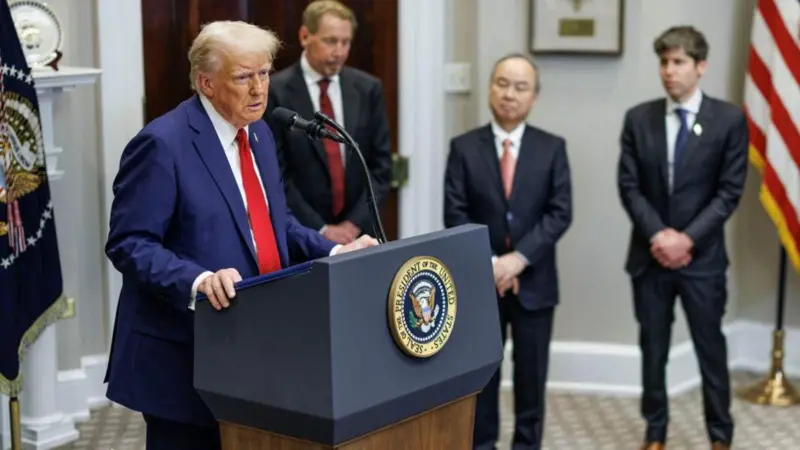
During a meeting with Israeli Prime Minister Benjamin Netanyahu at the White House, U.S. President Donald Trump made a shocking announcement about Gaza. Trump declared that the United States would take control of the Gaza Strip, remove unexploded bombs, and oversee reconstruction. He suggested that displaced Palestinians should relocate to neighboring countries such as Egypt and Jordan.
The Wall Street Journal revealed that Trump’s inner circle had kept the proposal secret. Only a few advisors knew about the plan. The statement immediately drew sharp criticism from world leaders, human rights organizations, and international diplomats.
Strong Reactions from Arab Nations
The United Arab Emirates (UAE) quickly rejected Trump’s Gaza plan. The UAE Foreign Ministry reaffirmed its commitment to Palestinian rights and denounced any attempts to remove Palestinians from their homeland.
Saudi Arabia, which had considered resuming normalization talks with Israel, also distanced itself from the proposal. Middle East Eye highlighted Jared Kushner’s involvement, suggesting that the plan could turn Gaza’s coastline into luxury resorts.

Protests Erupt in Berlin
Pro-Palestinian activists gathered in Berlin’s Potsdamer Platz to protest Trump’s plan. Demonstrators held Palestinian flags and banners reading “No to exile,” “Palestine is our land,” and “Stop aggression against the West Bank.” Protesters accused Trump and Netanyahu of trying to erase Palestinian identity. They called for global resistance against forced displacement.
Latin American Leaders Condemn the Plan
Colombian President Gustavo Petro strongly criticized Trump’s proposal. He warned that such a move could trigger more conflict. Petro condemned the ideology behind the plan, stating that “God’s people are not just white Americans or Israelis, but all of humanity.”
Brazilian President Luiz Inácio Lula da Silva called the plan “absurd.” He questioned where displaced Palestinians would go. He emphasized that Palestinians should receive compensation for destroyed homes instead of facing exile.
European Leaders Voice Opposition
Germany’s Foreign Minister Annalena Baerbock reaffirmed that Gaza, like the West Bank and East Jerusalem, belongs to the Palestinian people. She stated that expelling Palestinians from Gaza was unacceptable and violated international law.
Spain’s Foreign Minister José Manuel Albares agreed. He said that “Gaza belongs to the Palestinian people” and must remain part of a future Palestinian state. British Prime Minister Keir Starmer insisted that Palestinians must return home and rebuild their lives.
Concerns Within the U.S. Political Sphere
Most Republican lawmakers backed Trump’s statement. However, Senator Lindsey Graham, a close ally, issued a cautionary message. He warned against sending U.S. troops to Gaza, citing historical failures like the 1983 Beirut barracks bombing, which killed 241 American soldiers.
Trump’s Policy Shift and the Hidden Agenda
Trump’s recent stance marks a major shift from his first term. Reports suggest that his administration discussed relocating Palestinians and redeveloping Gaza for commercial use. Jared Kushner’s 2024 remarks at Harvard hinted at this plan. He said that Gaza’s coastal real estate could be “highly valuable” once Palestinians were removed.
France and the UK Push for a Two-State Solution
France and the United Kingdom both dismissed Trump’s takeover proposal. The French Foreign Ministry stated that “Gaza’s future cannot be controlled by a third party.” British Foreign Secretary David Lammy insisted that Palestinians must have the right to live and prosper in their homeland.
A Growing Global Backlash
Trump’s Gaza plan has ignited global opposition. Middle Eastern nations, European allies, and Latin American leaders agree: Gaza belongs to the Palestinian people. Forced displacement violates fundamental human rights and international law. As tensions rise, the world waits to see whether Trump will proceed with his divisive proposal or face mounting resistance.