
A historic echo in modern politics
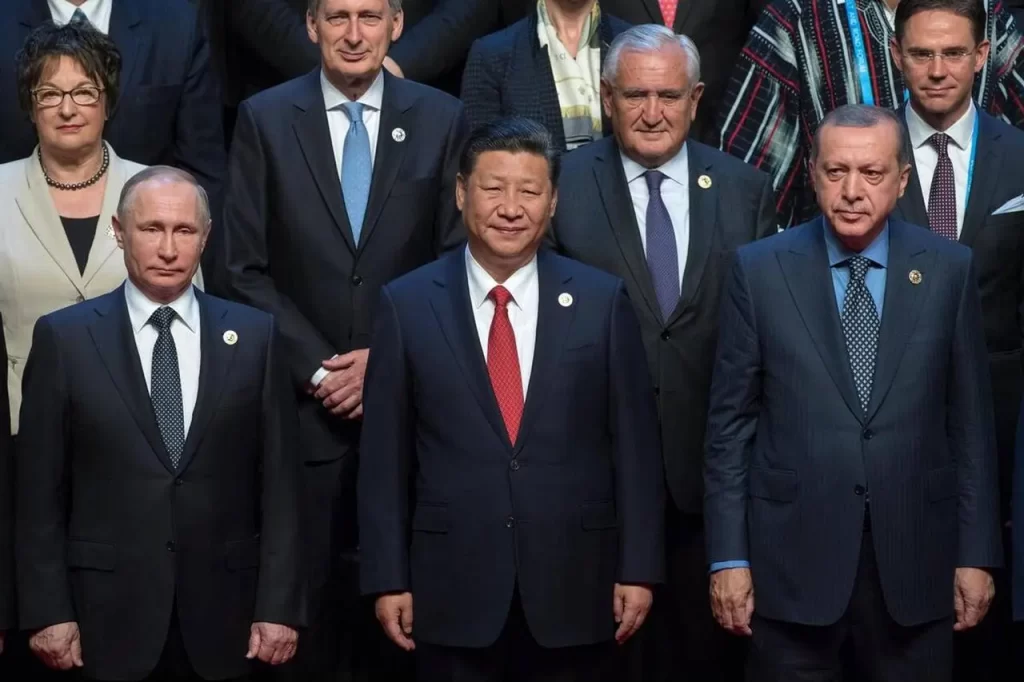
Nationalist Movement Party (MHP) leader Devlet Bahçeli, a close ally of President Recep Tayyip Erdoğan, has urged Turkey to consider a strategic alliance with Russia and China. His remarks came amid Israel’s Gaza offensive and shifting U.S. attitudes toward Ankara.
Bahçeli invoked history, recalling the 1964 Cyprus crisis when Prime Minister İsmet İnönü rebuffed U.S. President Lyndon Johnson’s warning letter by declaring, “A new world will be established, and Turkey will take its place in it.” For Bahçeli, today’s geopolitical changes mirror that moment. Yet, the realities of global alignments make such a proposal complex.
The limits of “alliance”
In diplomacy, “alliance” signals a binding pact, not just cooperation. Analysts stress Russia and China have traditionally avoided rigid alliance structures. Beijing promotes flexible partnerships under initiatives like the Global Security Initiative, avoiding bloc politics. Moscow benefits from Turkey’s balancing role inside NATO, which offers leverage against the West. A formal Turkey-Russia pact could disrupt that advantage.
Pragmatic ties with contradictions
Turkey and Russia maintain strong links in energy, tourism, nuclear power, and trade. Projects like the Akkuyu nuclear plant and rising Russian tourist inflows highlight this depth. But contradictions persist. The two countries backed rival factions in Syria, Libya, and the South Caucasus. Their relations remain transactional, not aligned.
Defense procurement underlines the dilemma. Turkey’s 2019 purchase of Russian S-400 missiles strained ties with the U.S., yet Ankara continues modernizing its air force within NATO. Renewed efforts to acquire Eurofighter jets show Western frameworks remain central to Turkey’s defense. Cooperation with China in this area is minimal.
Domestic orientation and political tradition
Turkey’s century-long republican tradition has been rooted, however unevenly, in democratic legitimacy. A formal bloc with Russia and China—both governed under authoritarian models—would mark a sharp ideological departure. Experts caution such a move could challenge domestic legitimacy and Turkey’s founding consensus.
Economics: Europe still central
Economically, Turkey’s strongest and most balanced trade is with the European Union. Annual trade volume exceeds $210 billion, compared to highly asymmetric flows with China, where Turkey imports nine times more than it exports. BRICS, often cited as an alternative, lacks the cohesion of a genuine economic bloc and struggles with internal rivalries.
Multipolarity and strategic autonomy
Bahçeli’s call reflects a wider belief among policymakers that the unipolar order has faded. Turkey’s Cold War history shows it could trade with the Soviet Union while remaining in NATO. Today, diversification with Russia and China makes sense in energy and technology. Still, labeling this as an “alliance” risks overstating what is feasible.
Gaza conflict as backdrop
The timing links directly to Israel’s Gaza offensive. The leader of the Turkey Nationalist Movement Party Bahçeli framed Russia and China as counterweights to Western backing of Israel. Yet both Moscow and Beijing have acted cautiously. Russia balances ties with Israel, while China avoids deep involvement in Middle Eastern conflicts. This makes them less reliable as alternatives than Bahçeli suggests.
Political message more than policy
Bahçeli’s words are unlikely to shift Ankara’s foreign policy soon. Still, they carry domestic political weight. By echoing historical defiance of the West, he underscores frustration with dependency while signaling a desire for more autonomy. For critics, the call highlights the gap between nationalist rhetoric and Turkey’s embedded economic and security realities.