
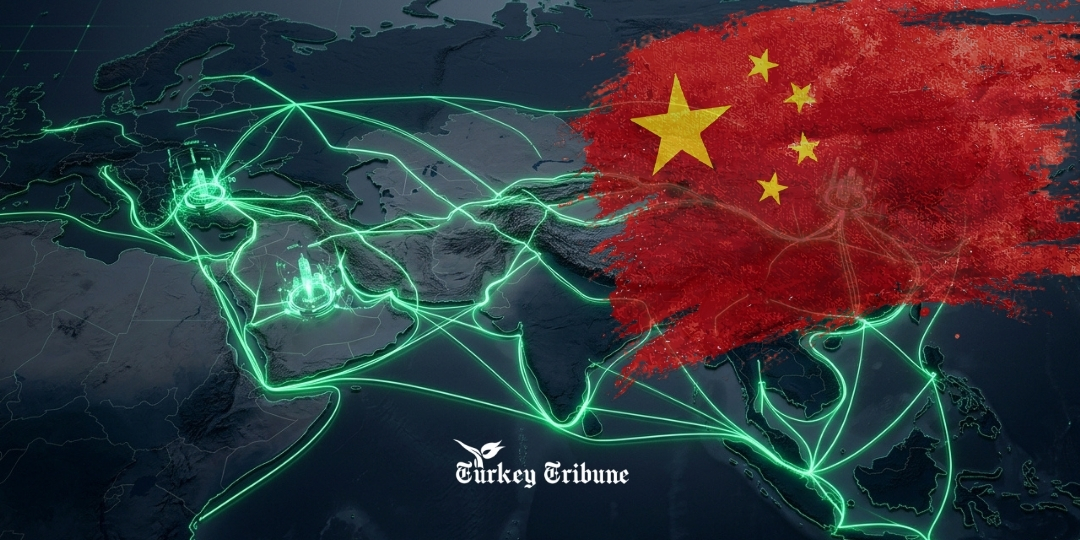
Look, global trade runs on rules. Most of these rules currently come from the West. But if China’s cultural heart turned toward Islam, we would see a total rewrite of the global rulebook.
This shift would move the center of gravity for global trade standards. It would force a change in how factories operate and how banks lend. Global investors and logistics firms need to watch this potential transition closely.
Halal as a technical requirement
China’s trade volume remains staggering. In the first nine months of 2025, its foreign trade grew by 4%. More than 51% of this trade now flows through Belt and Road partners. If China adopted Islamic principles, these routes would undergo a massive certification overhaul.
The global halal market will hit $2.3 trillion in 2026. By 2033, experts say it could reach $4.5 trillion. For a Muslim China, “halal” would not just be a food label. It would become a baseline technical standard for the entire supply chain. Factories in Shenzhen would need Sharia-compliant logistics to stay competitive in OIC markets.
Funding the future without interest
A Muslim-led China would likely walk away from debt-heavy financing. Islamic finance forbids usury (riba). Instead, it focuses on risk-sharing and real assets. This is a pragmatic shift—not just a religious one. It protects the economy from debt traps that often cripple emerging markets.
China’s footprint in Turkey is already deep. Total investments reached $5 billion by 2024. In this scenario, we would see a move toward sukuk (Islamic bonds) and equity partnerships. This helps small and medium enterprises (SMEs). These businesses often struggle with high interest rates in traditional markets. Sharia-compliant capital offers them a fairer way to scale.
What if Russians convert into Islam?
Ethics over price wars
Islamic business ethics focus on justice and honesty. Actually, this is exactly what global supply chains need right now. Transparency in contracts reduces legal disputes by roughly 70%. If China embraced these values, the “race to the bottom” on labor costs might finally end.
For Turkey, the stakes are high. Turkey exported $3.39 billion to China in 2024. A market built on Islamic ethics is a more predictable market. It moves trade beyond simple price competition. It prioritizes long-term social welfare and stewardship. Can an economy be both massive and just?
– This article was written by a Guest Writer.